InterviewNobuo Oki
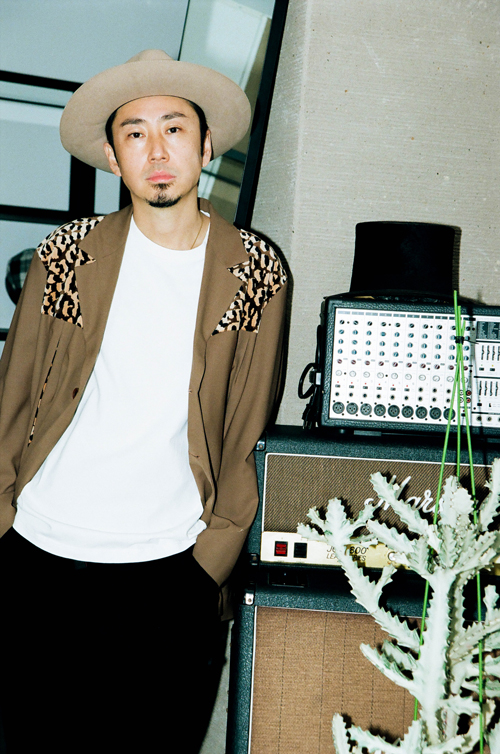
"By nature, I like to do everything myself; I'm the typical type of small business owner."
First, I'd like you to reflect on the first "SAI" festival, which was held in 2017, the year of the band's 20th anniversary. What significance do you think this festival held in the band's career?
Oki: I'm really glad we did it. At first, since it was a festival initiated by artists, I thought it would just be an event where we could convey the atmosphere of the anniversary, but when we actually opened it up, it turned out to be a festival overflowing with love, and I was able to experience more emotion than I had imagined. When I reached out to the band members who were friends but also rivals, they all readily said they would perform, which made me happy, and the tickets sold out in just a few minutes. I was also deeply moved to realize that there are so many people who love not just "us," but "rock bands of our generation." At first, I thought, "There's no way we could hold a festival," so I intended it to be a one-time event, but after it was over, I started to think, "I want to do this again." It's incredibly hard work to put on a festival, so we can't do it every year, but I vaguely thought, "It would be a miracle if we could do it again in five years or something."
From the opening act 10-FEET to the band before the headliner Straightener, the lineup was very much composed of bands from the same generation, and that was intentional.
Oki: Of course. If I were to organize a festival, I would want all of my fellow band members—who are also my friends and who inspire me immensely every day at live music venues and festivals—to perform.
You could say that they were the generation that greatly contributed to establishing the culture of "rock festivals" in Japan.
Oki: I think that was just a coincidence, as the time we debuted happened to coincide with the time when rock festivals were booming in Japan. But we actually got to perform at "ROCK IN JAPAN FESTIVAL" a lot, and you could even say that we wouldn't be where we are today without it. So, if we were to organize a festival, we wanted to make it one where we could share the greatness of Japanese bands with the friends we met at those kinds of places.
The year after your 15th anniversary in 2012, you became independent from your management company in 2013. There are two sides to that: the ability to "handle everything ourselves," and the realization that "nothing will move forward unless we do it ourselves." What kind of period would you say the years from then until the first "SAI" event in 2017 were for the band?
Since going independent, I've never once felt that it was difficult; in fact, I've thought, "I should have gone independent sooner." Of course, I think there are things that suit some people and not others, but I'm the type of person who wants to do everything myself, like a typical small business owner (laughs). If I were selling something, I might have been able to delegate tasks to others, but in my case, I'm making a living from my own ideas and identity, so I've always felt uncomfortable with the idea of entrusting responsibility to someone else and thinking, "I just need to make music." So, I decided to go independent because I wanted to take on all the positives and negatives myself, and from there I became very free musically. It's not that I was originally restricted, but I got tired of just doing music all the time, and I had a desire to use a different part of my brain, so going independent and starting a life where I could use both my right and left brain was a big turning point for me.
"If it weren't for COVID-19, I might have been too scared and never done 'SAI'."
What did you do after you thought, ``I want to do SAI again''?
Oki: I was eager to do it soon, so I thought, "2020 would be a good year to start," and since we had to book Saitama Super Arena two years in advance, I had been checking its availability from time to time since 2018. But it was hard to find a venue that was available, and after all, putting on a festival requires a lot of courage, and I wasn't prepared enough myself, so I was thinking, "I want to do it, but maybe I don't have to... no, but I really want to do it"... and then COVID-19 hit.
But instead of giving up, we decided to hold the event instead.
Oki: Maybe if it weren't for COVID-19, I might have been too scared to do it. But when COVID-19 made musicians' value zero, and it became a situation where there was no meaning to life, the thought "I have to do this now" started to well up inside me. So I made the decision around the end of 2020. If I didn't say yes then, I wouldn't have been able to secure Saitama Super Arena for 2022. I was prepared to lose 400 million yen, and I decided then and there, "Okay, let's do it."
At the end of 2020, we still had no idea what the future would hold.
Oki: But I felt like I had no choice but to do it. Maybe I was in a strange state, like a "corona high."
I guess he instinctively thought, ``It would definitely be a bad idea to stop moving here.''
Oki: That's right. I was always trying different things to swim, so my brain was wide open and I think that's why I was able to think, "Let's do it."
What's more, in 2017, the event was held for one day, but due to adverse winds, the event will be expanded to two days.
Oki: I thought that if we were going to do it, we should go all out. About a year later, when we decided on the specific ticket prices, we were still only able to let in half the number of people, so I think the ticket prices ended up being the highest among all festivals in Japan. But we hardly heard any complaints about it, and everyone felt that it was worth more than the price, so I'm glad we took the plunge and made the decision. At worst, we had to break even, otherwise we wouldn't be able to survive, so that's how we ended up with that price, but in the end we were able to hold it at full capacity and we were able to expect to make a profit, so we were able to try out a lot of different things. Full LED lighting, projection mapping, monuments with artist comments, and sparklers as souvenirs for all attendees. We were also able to have luxurious food vendors, and this time we laid artificial turf all over the artist area. In that way we were able to make the festival even richer.
Artificial grass in the artist area?
Oki: There's a culture that festivals have created, and at festivals like "ROCK IN JAPAN FESTIVAL," it was fun to lie down on the grass and drink, but that has been lost since 2020. "ROCK IN JAPAN FESTIVAL" was held at a different location in 2022, but with places like that becoming fewer and fewer nationwide, we wanted people to experience at least a little bit of that atmosphere in the artist area of Saitama Super Arena.
The reason you decided to hold a festival amidst the coronavirus pandemic was because you wanted to ``recover the festival culture that was once lost.''
Oki: I think that feeling gave me the push I needed.
We succeeded in bringing a celestial being down to Earth (lol)."

I think the reason there were few complaints about the ticket price was partly because people appreciated the bands' determination to hold the festival despite the pandemic, and also because the lineup was so impressive that it was well worth the price.
Oki: When we decided on the price, Mr. Children's appearance hadn't been confirmed yet, so I was thinking, "Is 15,000 yen too expensive? I feel bad," but the moment it was confirmed, I thought, "It was too cheap!" (laughs).
Ahaha. The overall lineup retains the feeling of the same generation as the first time, but now has a wider range of both older and younger generations.
Oki: First of all, we contacted all the artists who performed last time, and RADWIMPS was the only one whose schedule didn't work out, but everyone else immediately said yes. Also, in the five years since last time, there have been younger bands who have told us they like us, such as back number and sumika, and we also made offers to bands that we've admired for a long time, like Mr. Children, even though we didn't expect them to agree.
Personally, I was really moved by the appearances of ELLEGARDEN and DOPING PANDA. Both are bands that have reunited within the last five years, and I felt that their presence synchronized with the festival's theme of "reclaiming what was once lost," making it very meaningful.
Oki: That's right, this festival has become a revival of something that was once lost. I absolutely love Hosomi's singing voice, so I offered him the opportunity to perform with any band, but when I saw ELLEGARDEN's live performance, that feeling that had blown us away back then was not lost at all, and in fact it was even more powerful. At first I was watching from the wings, but I couldn't help but run out to the front and think what an amazing band they are. DOPING PANDA's entire lineup was decided before their reunion. Then we got the news that they were reuniting, and I said, "I'd love to invite them, but it's impossible now. Sorry," but then one artist happened to be unable to perform, so I contacted Yutaka right away. Yutaka's voice was trembling as he said, "Seriously?!" but I'm really glad we were able to invite them. We were happy, of course, but we could also feel how happy the audience was.
For fans who have followed bands of the same generation as ACIDMAN, the appearances of those two bands were truly special. And another band that was special was, of course, Mr. Children.
We succeeded in bringing Tenjin Oki down to Earth (laughs). About a year before the event, I half-seriously, half-jokingly, said, "I wonder if Mr. Children could perform?" and I still remember the atmosphere among the members and salesperson that was like, "What are you talking about?" We had some connections, like having them perform at "ap bank Fes," but even so, I never thought Mr. Children, who don't often perform at festivals, would say yes, so I was incredibly happy.
I think Sakurai also felt that "Japanese music culture must not be allowed to die down." Moreover, Mr. Children is a legend in J-POP, but at the same time, they have always been an alternative rock band, and I feel there was an affinity with "SAI" as well.
Oki: I agree. I've liked Mr. Children since high school, and I think I listened to them as J-POP back then, but after entering university, I started listening to them as a rock band. Moreover, when I listened to "Shinkai," my impression changed even more, and I realized that they are truly alternative and a very artistic band, so I thought, "I absolutely want to invite them this time."
What was it like watching Mr.Child's live performance at your own festival?
Oki: Well, right from the first song, "Owari Naki Tabi" (Endless Journey)... I wrote comments for each artist and left them in their dressing room. I wrote something like, "I really love your new song, 'Ikire' (Live), that song is amazing," to Mr. Children, and then they ended their set with that song. Of course, they might have just played it last because it was a new song, but I thought it was impressive that they started with "Owari Naki Tabi" and ended with the message of "Ikire," and it made me realize once again that they are a band that has been doing this magical thing for a long time, creating the world of Mr. Children with just one note without doing anything unnecessary.
It's the same with ``Ikiro'' and the work ``Shinkai'', but Mr. Child is also a band that depicts a view of life and death, and that may be in sync with ACIDMAN.
Oki: You're right, I think there are actually some similarities between Mr. Children and ACIDMAN, between Sakurai and Nobuo Oki. Some people might say, "They're complete opposites!", but I think you'll understand if you read the lyrics carefully. It might be presumptuous of me to say this, but I think there are a lot of similarities.
"Hearing the words of a senior who understood and accepted me made me feel like I was being hugged."
After seeing Mr.Child's live performance, how did you feel about your own live performance? It was also a big live show for two days.
Oki: It was more like, "All that's left is to do it," and I was surprisingly relaxed mentally. The audience, including Mr. Children fans, didn't leave until after we performed. It might seem obvious, but I was really happy about that, and I think I was able to perform confidently without any strange tension.
Of course, many bands performed before Mr. Children, and each one was fantastic, which is probably why the atmosphere wasn't one of "going to see a band you're particularly interested in," but rather "let's just enjoy this day."
Oki: You're right. On the first day, we started with Tokyo Ska Paradise Orchestra, and on the second day, with THE BACK HORN. I think everyone watched from beginning to end and was satisfied. Nowadays, there may be more people at festivals who go to see their favorite band, but I think those two days were filled with people who enjoyed everything.
I'm sure you could list many other famous moments from the two days, but when it comes to special moments for you, which one from whose live performance would you say?
Oki: I burst into tears during BRAHMAN's TOSHI-LOW's MC. I had been carrying so much weight up until that day, so I kept thinking, "I'm not going to cry during my own performance on the second day." I'm actually quite prone to crying, but I knew I couldn't let myself cry at 45, so I did a lot of mental training. But then, unexpectedly, I was completely unprepared during BRAHMAN's performance, and TOSHI-LOW's MC really hit me hard. Something snapped inside me, and I ended up sobbing backstage. Crying uses up energy, so you're absolutely not supposed to cry before a live performance. But I fell right into his trap, and even after the show, I was still so excited for about an hour, and I cried out loud again in the bathroom. I was thinking, "What have you done? I'm never inviting him again!" (laughs), but I somehow managed to regain my composure.
What kind of MC were you?
Oki: He said something like, "Oki brings together disparate music into one festival and connects them. It's like connecting the stars in the night sky with lines to make a constellation." I thought that was such a clever way of putting it, and I felt like I was being embraced by the words of a senior who understood and acknowledged me to that extent. For me, that was the highlight of the whole experience.
About two months have passed since those two days. Looking back now, what kind of meaning do you think the second “SAI” was for the band?
Oki: Those two days were truly irreplaceable, and I think they've already become two days that can't be left out in ACIDMAN's career. But as time goes by, it's hard to believe that I was the one who did it. I don't feel like a rock star on a daily basis, but for a while after that festival, I think I was trying to act cool, like, "I'm the one who invited Mr. Children!" (laughs). But recently, I've been wondering, "Did someone like me really invite Mr. Children?" and I'm returning to my usual self. I was so close to soaring to the heavens, but I've come down to earth again.
But I'm sure that experience will change my future creations, and I think it was an extremely important moment for the future of Japanese festival culture.
Oki: Thank you.
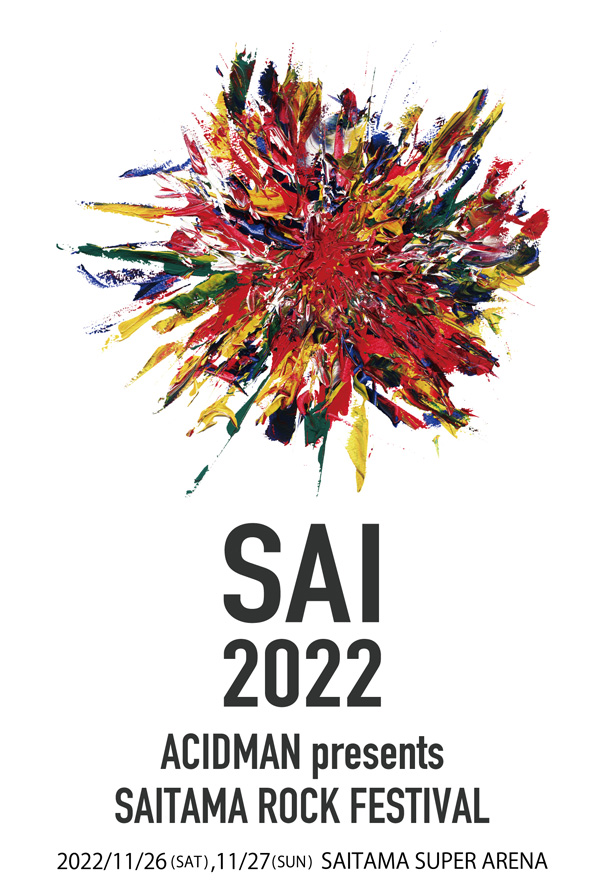
"(For the visual art of 'SAI'), I prioritized energy above all else, and spent about two hours drawing until I was completely exhausted."
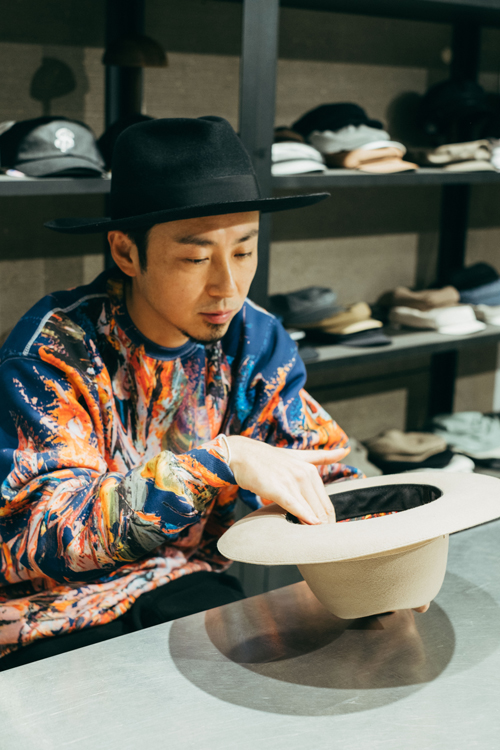
I would also like to ask you about "CA4LA x ACIDMAN FELT HAT SAI Limited," COLLABORATION with CA4LA.
Oki: Thankfully, CA4LA has been making original hats for my live performances for me for a long time, ever since my debut, so I think it's been almost 20 years now. This time, I had them make the lining with an all-over print of the visual art for "SAI" that I drew, which I think is something that's not usually possible, but they were able to accommodate my request right away. I also gave them my requests regarding the color and the size of the brim, and left everything else to Akimoto-san (CA4LA Creative Director), who I always ask to do the work.
Akimoto: The hats that Oki-kun wears at live shows are always made in his atelier, and normally you can't get one made unless you order it, but I tried to make one that's as close to the original as possible.
Oki: The brim is just a little bit shorter than what I usually wear. It's really just a slight difference in balance, and I think if someone else wore what I usually wear, they might get laughed at.
Akimoto: It feels a bit exaggerated.
Oki: That's right. So, generally speaking, I think this is just right.
From your perspective, having worked with various artists, Mr. Akimoto, is Mr. Oki's attention to detail regarding hats particularly special?
Akimoto: That's top-level attention to detail. Oh, Nobuo Oki...
Oki: Is that LOW IQ 01?
Akimoto: That's right (laughs). Just like with ACIDMAN's music, they place a lot of emphasis on detail, and we want to live up to that trust, so we're very careful about it. If the balance is even slightly off, they'll notice, so there's no way to hide it (laughs). We have Nobuo Oki's patterns in our atelier, and we make our clothes to match them every season.
The visual art of "SAI" has been used since the first event, but how was it originally created?
Oki: At first, I asked a professional artist to draw something different for me, but I felt like something was off. So, I wondered what to do, and I realized that I've always loved drawing. I received 20 awards during my six years of elementary school, and my dream was to become a painter. My teachers had high hopes for me, but in my first year of junior high, that talent suddenly disappeared. I suddenly became bad at it, and it stopped being fun at all. So I went into music, but I've always loved drawing, and I've occasionally drawn album covers, like ACIDMAN's second album, "Loop." So, in 2017, I thought, "Let's give it a try," and bought acrylic paints and a trowel. I had already decided on the title "SAI," so I went with the image of Taro Okamoto's "Art is an explosion," a festival, fireworks, and above all, energy, and I spent about two hours drawing until I was exhausted. Thanks to that, I think I created something good, and I'm glad I was able to use it this time as well.
It also looks like a big bang.
Oki: That's right. It also has a cosmic image.
Akimoto: It's luxurious that this is used as the lining, isn't it?
Oki: I thought it probably wouldn't be possible, so I asked them saying something like, "I don't think it's possible, but..." and salesperson replied, "They said they'll do it," and I was like, "Really?" It was so cool, and I'm really glad I asked them.
I never thought I'd still be playing rock music at 45, but now that I've been given this opportunity, I'm determined to keep doing it for the rest of my life."
Lastly, please tell us about ACIDMAN in 2023.
Oki: Right now, my strongest feeling is "I want to create." Last time, I carried the energy from the festival straight into the tour and ran all the way to the final show at Budokan, but this time, I want to focus on the festival first. I'm not going to rest, but I want to use the energy I gained there to carefully create and deliver it to the world. It would be great if, after a dreamlike festival, I could think, "I don't need to do anything for a while," but I'm only human, so new desires will inevitably arise, and realistically, I need to earn money to feed the members and salesperson. However, I can't do it just for the money, so it's important to draw up a blueprint over a 3 to 5 year span in order to properly align my desires with the business. By doing so, it becomes clear "what I should be doing now."
There are many great bands in our generation, but no other band has progressed their career the way ACIDMAN has, and that's because, as you just mentioned, Mr. Oki is always thinking about the future of the band. I felt like it was a big deal.
Oki: I'm a total scaredy-cat (laughs). When I drink with various artists, I realize they're overwhelmingly scared. I'm always anxious, scared of dying, scared of getting sick, scared of not being able to make a living, scared of my fans leaving me, so I'm always trying to prepare.
I think it's because we don't turn our eyes away from it and look firmly at the reality that we were able to carefully and boldly move the band, and were able to hold "SAI."
Oki: That might be true. I never thought I'd still be playing rock music at 45, but now that I've been given this far, I'm determined to keep doing it for the rest of my life. That means I need to try even more from now on, and that feeling is getting stronger, so I'm really excited. Up until now, there was a part of me that thought, "We're not good enough," but now I have a much stronger desire to aim higher.
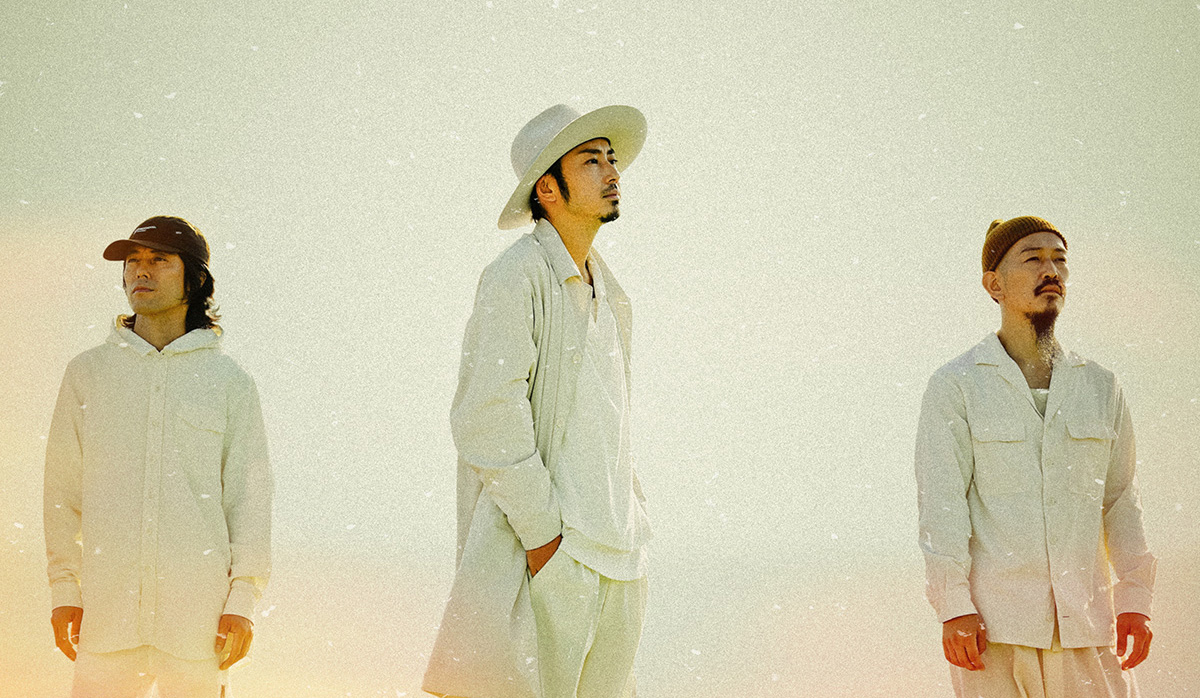
ACIDMAN
Composed of Nobuo Oki (Vo&G), Masatoshi Sato (B), and Kazuto Urayama (Dr), this rock band expands the possibilities of a three-piece band with their grand poetic world themed on "life" and "the universe," incorporating various genres of music, and a wide range of sounds that move between "stillness" and "movement." They made their major debut in 2002 with the album "Sou" and have since headlined numerous rock festivals. In 2017, as the culmination of their 20th anniversary, they held their first self-organized rock festival, "SAITAMA ROCK FESTIVAL "SAI"," at Saitama Super Arena in their hometown of Saitama Prefecture, with tickets selling out immediately. To date, they have released 12 original albums and held six successful concerts at the Nippon Budokan. In 2022, as the culmination of their 25th anniversary year, they held "SAITAMA ROCK FESTIVAL "SAI" 2022" for the first time in five years. Oki is a licensed pharmacist and also serves as the representative of their management company.
HP | Instagram | X | YouTube | LINE